
2026-10-21
REA × Claude Code: multi-client telemetry and identity surfaces (community case)
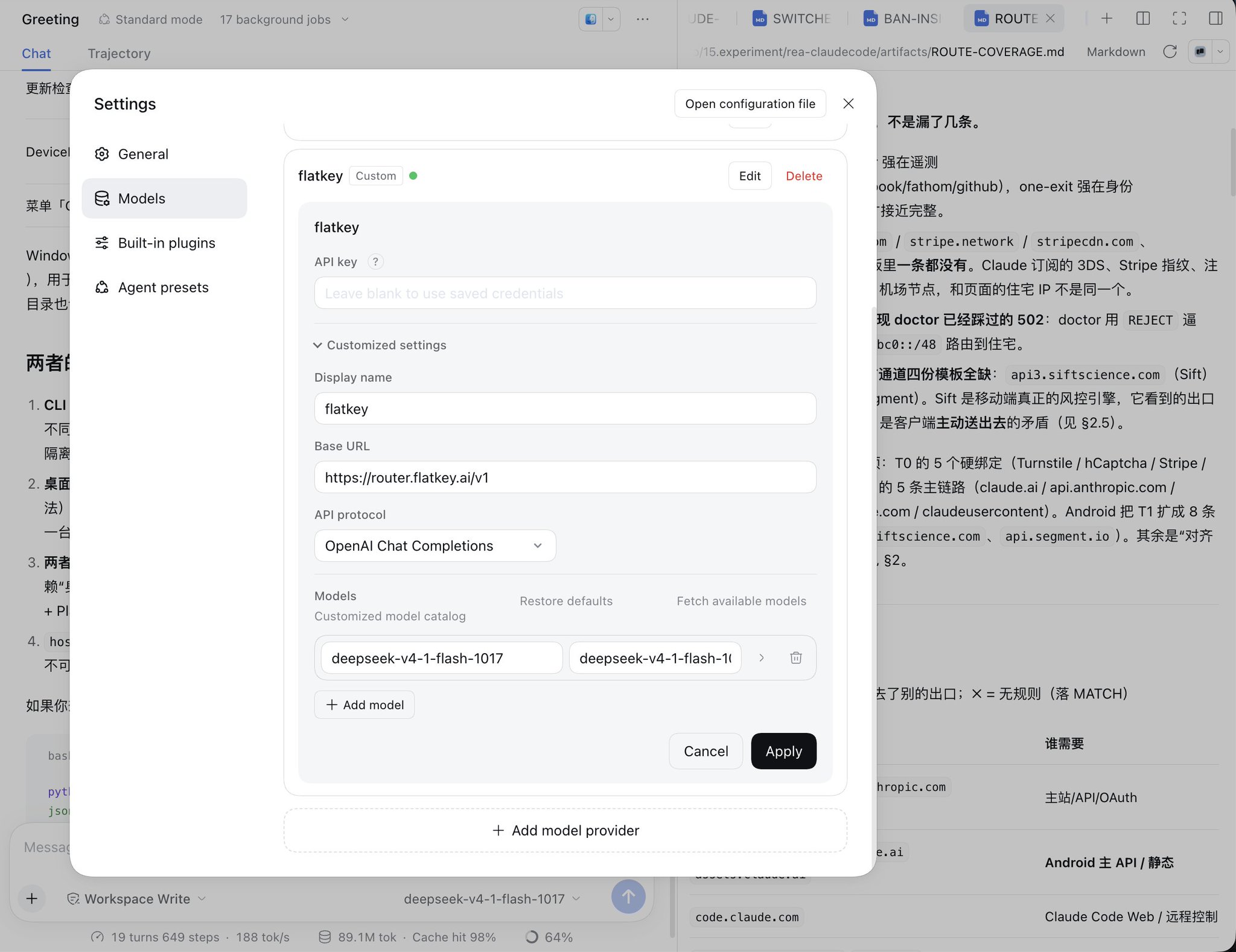
On 2026-10-21 (X created_at 2026-10-21T03:28:04Z, 11:28 UTC+8), @wquguru posted that they had used REA to analyze Claude Code across Mac CLI, Mac App, and Android App, then summarized how those clients differ on telemetry and device identity. This rea.run page is a compliance teaching rewrite: what the author publicly claimed, how operators should read those claims, and an authorized REA workflow that inventories surfaces — not a guide to evade product controls, share accounts, or route payment/fraud endpoints. Chinese: /zh/blog/rea-claude-code-client-surfaces/.
Product one-liner: REA can surface multi-client telemetry and identity for comparison. This page is teaching traffic for that skill. It is not a Claude subscription anti-ban tutorial.
Attribution: Claims below are community report / author public assertions from the linked X post. rea.run did not independently reproduce the Claude Code binaries for this page. Label every row accordingly until you replay on targets you are allowed to hold.
Snapshot numbers (re-check before you cite)
X API snapshot taken while drafting this page on 2026-10-21 (UTC+8 lab clock). Counters move.
| Item | Value | Source |
|---|---|---|
| X post | status 2112747723078422809 | @wquguru |
| Created (UTC) | 2026-10-21T03:28:04Z | X API |
| Created (UTC+8) | 2026-10-21 11:28 | converted |
| Impressions | 31604 | X public_metrics |
| Likes | 133 | X public_metrics |
| Bookmarks | 215 | X public_metrics |
| Reposts | 16 | X public_metrics |
| Replies | 19 | X public_metrics |
| Quotes | 3 | X public_metrics |
| Author handle | @wquguru | X API |
| Author followers (snapshot) | 24720 | X user metrics |
| Surfaces named in post | Mac CLI, Mac App, Android App; iOS speculated | post text |
| Analysis host (author) | Mac; DeepSeek Harness + flatkey | post text |
Impressions and likes are discovery signals (/blog/evaluating-rea-claims/ when present). They are not an install SLA and not permission to unpack a commercial client you do not own.
What this case is (and is not)
| Claim | Operator reading |
|---|---|
| Author used REA to inventory Claude Code client surfaces on Mac + Android | Yes — stated in the post |
| Cross-client asymmetry in telemetry / identity investment | Author’s public comparison; treat as community report |
| Official Anthropic documentation or security advisory | No |
| Permission to reverse a commercial app you do not own | No — stay inside /compliance/ |
| Recipe for multi-account / subscription evasion | No — out of scope on rea.run |
| Step-by-step Play Integrity or fraud-stack bypass | No — never |
| Proxy module YAML / fill-in tables for third-party exits | No — not reproduced here |
Required comparison table (Android / Mac / iOS)
Rows paraphrase the author’s public bullets. The ops interpretation column explains how a security or platform team might *think* about the asymmetry — it does not teach how to defeat any control.
| Client | Author public claim (telemetry / identity) | Ops interpretation (no bypass teaching) |
|---|---|---|
| Android | Strongest checks among the surfaces named: Sift anti-fraud; SIM country observed; device identity from ANDROID_ID + Play Integrity + hardware key, described as stable across app reinstall | Identity is anchored in device / integrity layers as well as app install state. In an authorized test program, separate device identity from session identity in your Evidence notes; do not treat “reinstall wiped identity” as a planning assumption |
| Mac App / Mac CLI | Sentry + Datadog for telemetry; device ID described as random, not hardware-bound | Skews toward a general observability stack. Investment looks asymmetric vs the Android fraud / integrity surface the author reported — useful for inventory diagrams, not for “which client is easier to abuse” runbooks |
| iOS | Author speculates it is similar to Android | Mark explicitly as speculation, not closed-loop. Do not promote iOS rows to facts until Evidence exists on an authorized target |
How to cite this table in a ticket
- Link the X post.
- Prefix every claim with community report until your lab replays it.
- Keep unknowns explicit (especially iOS).
- Never attach “how we bypassed X” as a follow-up to these rows on rea.run.
Evidence buckets: telemetry vs API vs payment
When REA (or any static/network inventory) lists hostnames and SDKs, bucket them before you act. Mixing buckets is how teaching pages accidentally become abuse runbooks.
| Bucket | Examples (illustrative categories, not a dump of the author’s private notes) | Operator rule |
|---|---|---|
| Telemetry / observability | Crash and RUM vendors (e.g. Sentry, Datadog), product analytics SDKs | Inventory for privacy reviews and SOC2-style maps; do not treat as “optional to drop for convenience” |
| Product / model API | First-party Claude / Anthropic API origins you are licensed to call | Authorized traffic only; respect ToS and rate limits |
| Payment / fraud / integrity | Card processors, CAPTCHA / Turnstile-class challenges, device integrity (e.g. Play Integrity), anti-fraud vendors (e.g. Sift) | Not “business APIs you freely re-route.” Changing egress for these is a compliance and fraud problem, not a networking tip |
| Unknown / third-party | Domains you cannot classify from strings alone | Leave as unknown in Evidence; do not invent a proxy policy |
Hard teaching rule: do not treat third-party domains (telemetry, fraud, payment, captcha, analytics) as freely proxyable “business APIs.” That sentence is the entire point of this section.
Authorized REA workflow checklist
Use this sequence on targets you own, open fixtures under a compatible license, or systems covered by written permission. See /compliance/ and /faq/legal-boundary/.
- Authorize the target — write down ownership or permission before you unpack anything. Commercial Claude clients are not a free teaching corpus.
- Install +
doctor— pin a knownrea-agentsversion; rundoctor --jsonand keep the JSON on the ticket. Start: /docs/install/. - Unpack / strings / egress inventory — recover package layout, embedded strings, and observed or declared network exits into Evidence. Prefer retained Evidence summaries over dumping secrets into chat.
- Bucket Evidence — label each host/SDK as telemetry, product API, payment/fraud/integrity, or unknown (table above).
- Compare clients as surfaces — build a table like the one on this page; mark speculation separately from closed-loop facts.
- Stop before abuse — if the next step would be “defeat integrity,” “farm devices,” or “bind payment checks to a residential exit,” you have left the teaching path. Close the ticket.
npx -y [email protected] doctor --json
# reconnect your MCP client after a pin change
# optional: client-scoped doctor if you use DeepSeek Harness
npx -y [email protected] doctor --client dsh --json
DeepSeek Harness (dsh) is a supported setup id from rea-agents 6.5.0 onward (/docs/clients/; live DeepSeek API integration is still marked unverified upstream). That is why it appears in doctor examples — not because this site sells model routing.
Author workflow note (not the primary CTA)
The author said the full analysis ran on a Mac using DeepSeek Harness with flatkey as the model router, and pointed readers at DeepSeek’s desktop download. One sentence is enough for attribution: that was their agent stack for driving REA. Primary CTAs on rea.run stay install REA, compliance, and related teaching posts — not a recharge promo. Optional external pointers the author named: DeepSeek download. Client matrix: /docs/clients/.
Separate proxy-template repo (one link only)
The author also maintains a separate repository of proxy-oriented templates; the post pointed at commit b9d9f8a (“fix identity exits…” in the commit subject). rea.run does not reproduce that commit’s YAML, JS, modules, or fill-in tables. If you need the author’s own materials, open their repo directly. This site’s job is the REA comparison lesson above.
Compliance
- Authorized targets only. Own software, licensed fixtures, written permission, clean-room labs. /compliance/ · /faq/legal-boundary/.
- REA ≠ account-abuse toolkit. Inventorying telemetry and identity surfaces is a defensive / research skill. Evading subscription, integrity, or fraud controls is out of scope.
- No device-farm / emulator-farm bypass tutorials. ADB and Android lanes on this site mean your device or emulator under authorization — /docs/android-adb/.
- No Play Integrity / SIFT bypass steps and no “sandbox the fraud SDK” recipes.
- Primary CTAs: /docs/install/ · /blog/agentenv-rea/ · /showcase/ when a fitting case applies · this page’s Chinese twin.
FAQ
| Question | Short answer | Where |
|---|---|---|
| Did rea.run reproduce Claude Code unpacking? | No for this page — community report labeled as such | This page §Attribution |
| Is the iOS row a fact? | No — author speculation | Comparison table |
| Can I treat Sift / Play Integrity / payment hosts as normal APIs to proxy? | No | Evidence buckets |
| What is the main CTA? | Install + doctor REA; stay compliant | /docs/install/ |
| Does mentioning DeepSeek Harness / flatkey mean we endorse recharge funnels? | No — one-sentence author workflow attribution only | Author workflow note |
| Where is the proxy YAML from the X post? | Not here — one external commit link only | Separate proxy-template repo |
| Is REA for multi-account Claude setups? | No | Compliance |
Related
- /docs/install/ — install and doctor
- /blog/agentenv-rea/ — how REA captures relate to AgentEnv teaching
- /showcase/ — other community cases
- /docs/clients/ — including DeepSeek Harness (
dsh) - /docs/android-adb/ — authorized Android device lane
- /blog/open-claude-ui-rea-case/ — different Claude-adjacent REA case (clean-room UI)
- Chinese edition: /zh/blog/rea-claude-code-client-surfaces/
Sources
- @wquguru status 2112747723078422809 — primary narrative; metrics snapshot 2026-10-21
- Author’s separate proxy-template commit (external only): wquguru/one-exit@b9d9f8a
- REA CTAs: /docs/install/ · /compliance/ · /faq/legal-boundary/ · /docs/clients/ · /blog/agentenv-rea/
- Optional author-named download: DeepSeek desktop